
If you love mysteries where the sleuth fights a private battle while chasing a killer, the character has to feel real before the plot ever lands. I write that kind of crime fiction, so I know the tell: you finish a book and you miss the person, not just the puzzle.
Let me introduce you to two of the protagonists in my small-town mysteries, the wounds that drive them, and how to decide which one to read first.
Key takeaways
- Character-driven crime fiction puts the protagonist’s personal struggle on equal footing with the case, so solving the crime also costs the sleuth something real.
- Gabe Gabrieli is a former lawyer turned private investigator who must face reminders of a past he’d rather avoid when his younger brother is charged with murder in The End Game.
- Olivia Mercier is an investigative reporter estranged from her husband Dom Bertucci, Prospect’s Captain of Homicide, which turns every case into a marriage minefield.
- Breaking News: Local Heiress Dead won the inaugural Toby Award for Best Mystery by a Canadian Indie author.
- If you like authors like Louise Penny, Tana French, Sue Grafton, or Robert Crais, my books sit in the same lane: flawed sleuths, buried town secrets, and stakes that hit the protagonist at home.

What does “character-driven mystery” actually mean?
A character-driven mystery is one where the protagonist’s inner life drives the story as hard as the crime does. The case is the engine, but the fuel is the sleuth’s own struggle: a fractured family, a failed marriage, a guilt they can’t put down.
Plot-driven mysteries ask “who did it?” Character-driven mysteries ask that too, then add “and what will finding out cost this person?” You get both answers by the last page. That second question is why readers stay up past minight. The clue matters more when the person chasing it has something to lose beyond a paycheck.
Here is my rule when I draft: if I can swap the protagonist for a different detective and the story barely changes, the book is not character-driven yet. The personal stakes have to be load-bearing. Take them out and the plot collapses.
Who is Gabe Gabrieli, and what is he running from?
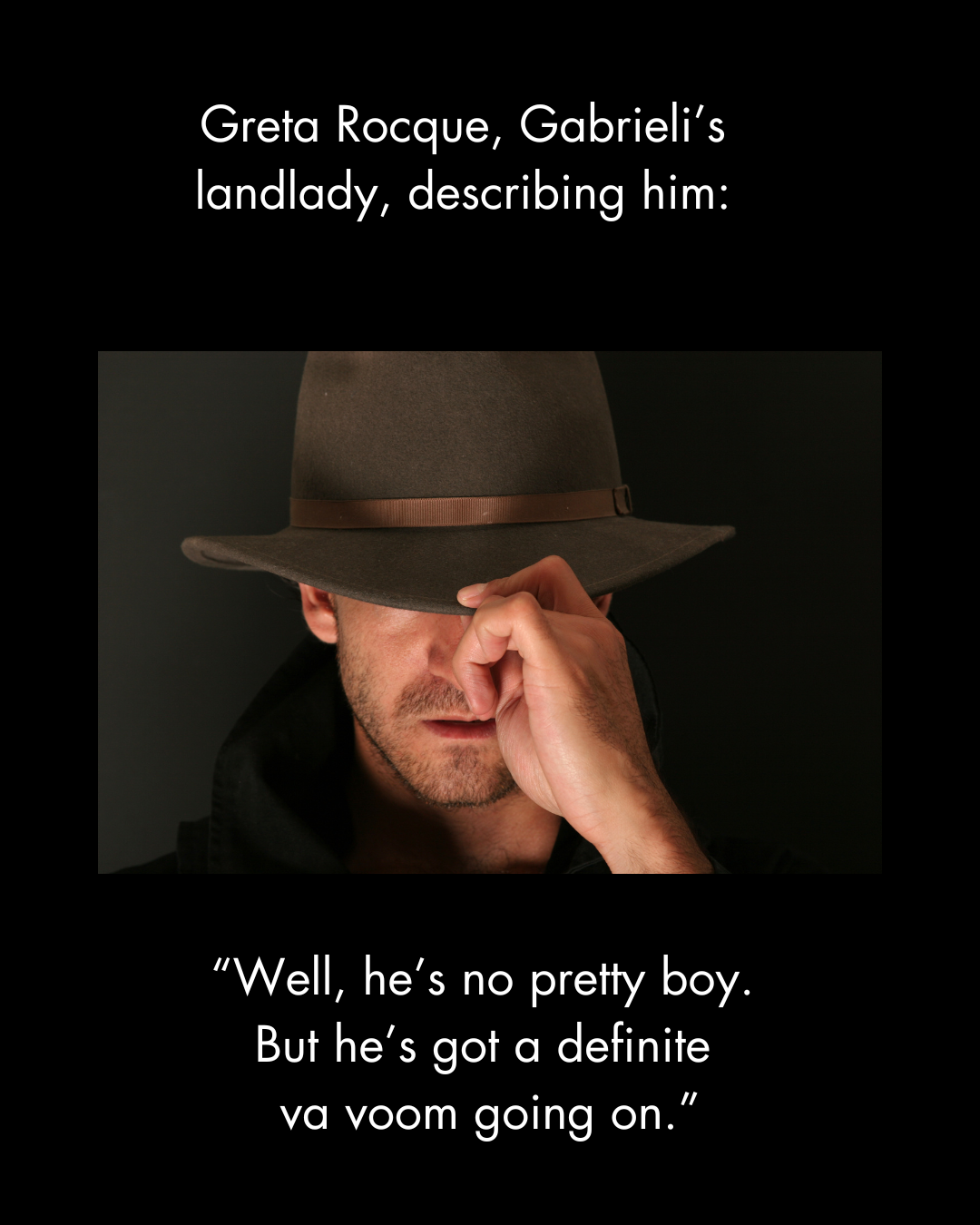
Gabe Gabrieli is a former lawyer who walked away from the law and now is a part-time bartender and part-time private investigator. He spends the series trying to stay out of trouble that keeps finding him. He is smart, wry, and carrying regret about the marriage he can’t quite fix.
In The Gabrieli Mysteries, the personal stakes involve family and friends. For example, in The End Game, Gabe’s kid brother is charged with murder, and Gabe is the only one positioned to prove otherwise. That is not an abstract case. It is his brother, his history, and his own belief about who his family is, all on the line at once.
The End Game was one of five finalists for Crime Writers of Canada’s Award of Excellence for Best First Crime Novel.
What makes Gabe work for readers who like emotionally complex sleuths:
- He is competent but not invincible. He gets things wrong and pays for it.
- His past as a lawyer gives him tools and scars in equal measure.
- The small-town setting means he can’t hide. Everyone knows his name and may, if he’s not careful, learn his history.
If you read a Gabe book and finish thinking about his choices rather than just the reveal, that is the design working.
Who is Olivia Mercier, and why is her marriage part of the mystery?
Olivia Mercier is an investigative reporter for the Prospect Gazette, and her estrangement from her husband Dom Bertucci, Captain of Homicide for the Prospect Police Department, sits right at the center of the first case she chases. She’s the prime suspect in the murder of her former best friend, the same woman who is the reason for Olivia’s estrangement from Dom.
That tension is the whole point of the Breaking News Mysteries. Set in a fictional California small town near Donner Lake, the series pits a reporter’s instinct to expose against a cop’s instinct to contain, with a broken marriage running underneath. In Breaking News: Local Heiress Dead, Olivia races the clock to find a killer, digs up secrets the town buried on purpose, and lands herself on the killer’s list. The professional risk and the personal risk climb together.
Breaking News: Local Heiress Dead won the inaugural Toby Award for Best Mystery by a Canadian Indie author, which tells you the character work holds up under judging, not just my own bias.
Why Olivia lands with readers who love flawed, striving protagonists:
- Her job gives her a legitimate reason to investigate, so she is never a nosy bystander.
- Her marriage is unresolved, which keeps a slow-burn emotional thread running through the plot.
- She takes real risks, and the town’s secrets have real weight because people killed to keep them.
How do these two sleuths compare, and which should you read first?
Start with whichever wound sounds most like the books you already love. Here is a side-by-side to make the call fast.
| Gabe Gabrieli | Olivia Mercier | |
| Series | The Gabrieli Mysteries | The Breaking News Mysteries |
| Job | Ex-lawyer, part-time bartender/part-time PI | Investigative reporter |
| Core personal struggle | Family loyalty and a wrongful murder charge | Estrangement from her homicide-cop husband |
| Signature book | The End Game (brother charged with murder) | Breaking News: Local Heiress Dead (Toby Award winner) |
| Setting | Small town in British Columbia mountains | Fictional California small town near Donner Lake |
| Read this first if you like | Redemption arcs and family drama | Slow-burn relationship tension and a feisty, snarky protagonist |
If you gravitate toward stories where family is the fault line, start with Gabe and The End Game. If you like a protagonist juggling a dangerous story and a marriage that won’t resolve, start with Olivia and Breaking News: Local Heiress Dead.
Which similar authors should you read if you love emotionally complex sleuths?
If you like mystery writers who put characters through personal struggles alongside the case, read authors who treat the sleuth’s inner life as plot, not decoration. My honest shortlist, and the reason for each:
- Louise Penny for small-town crime where community and personal history shape every investigation. Her Three Pines books are the gold standard for place-plus-character.
- Tana French for psychological depth and detectives who are changed, sometimes damaged, by the cases they close.
- Robert Crais for a wry PI (Elvis Cole) whose loyalty and personal code drive the danger, close cousin territory to Gabe.
- Sue Grafton for a female sleuth who solves complex cases while managing her often messy life and loves
I put my own books in this company deliberately. When a reader tells me a Gabe or Olivia story reminded them of a Louise Penny or Sue Grafton read, that is the exact shelf I am writing toward: flawed people, buried town secrets, and a case that forces a reckoning at home.
Here is my contrarian take: A twist ending is worth far less than most mystery advice claims. Readers rarely remember the mechanics of the reveal a month later. They remember whether they cared about the person standing in the wreckage. I would trade a clever twist for a true character moment every time, and I build my books that way.
How I build a backstory that changes the case
I start every protagonist with one wound that the current case will press on, then I make sure the plot cannot resolve without touching it. Gabe’s history of being wrongfully charged with murder and his brother’s arrest are the same nerve. Olivia’s job and her marriage are the same nerve. The mystery becomes personal because I wired it that way before I wrote chapter one.
A few things I hold to when drafting:
- The sleuth must want something they can’t have cleanly, so every choice has a cost.
- The setting knows the character. Small towns remember, which raises the stakes on old secrets.
- The emotional arc and the case arc resolve close together, so the payoff is doubled.
Frequently asked questions
What are the best character-driven mystery series to read next?
If you want protagonists carrying real personal struggles alongside the case, try Louise Penny’s Three Pines, Tana French’s Dublin Murder Squad, Sue Grafton’s Kinsey Milhone novels, and Robert Crais’s Elvis Cole novels. My own Gabrieli Mysteries and Breaking News Mysteries sit in the same lane, with flawed small-town sleuths and stakes that hit at home.
Who is the main character in Charlotte Morganti’s mysteries?
There are two lead sleuths in my non-cozy novels (in addition to writing PI and amateur sleuth novels, I write cozies.)
Gabe Gabrieli is a former lawyer turned part-time private investigator in the Gabrieli Mysteries, and Olivia Mercier is an investigative reporter in the Breaking News Mysteries. Each carries a personal struggle that the plot forces them to confront.
What order should I read the books in?
Start with the signature title for whichever protagonist appeals to you: The End Game for Gabe or Breaking News: Local Heiress Dead for Olivia. The End Game is the first title in the Gabrieli Mysteries, so start there. The second title in the Breaking News Series is currently a work in progress. For the full lineup, check the series pages for the Gabrieli Mysteries and the Breaking News Mysteries.
Are these mysteries part of a series or can I read them standalone?
Each book is written to stand on its own. Pick the sleuth whose struggle sounds like the books you already reread, grab their signature title, and start there.
0 Comments